
OpenAI pubblica la guida ai prompt di GPT 5.5: 7 cambiamenti chiave
When GPT-5.5 launched, OpenAI published an official prompting guide. If you still write step-by-step “micromanagement” prompts from older models, you may be narrowing what the model can do. This article turns the seven most important shifts into practical guidance.
Keywords: chatgpt, gpt 5.5, gpt tutorial.
Published: May 22, 2026
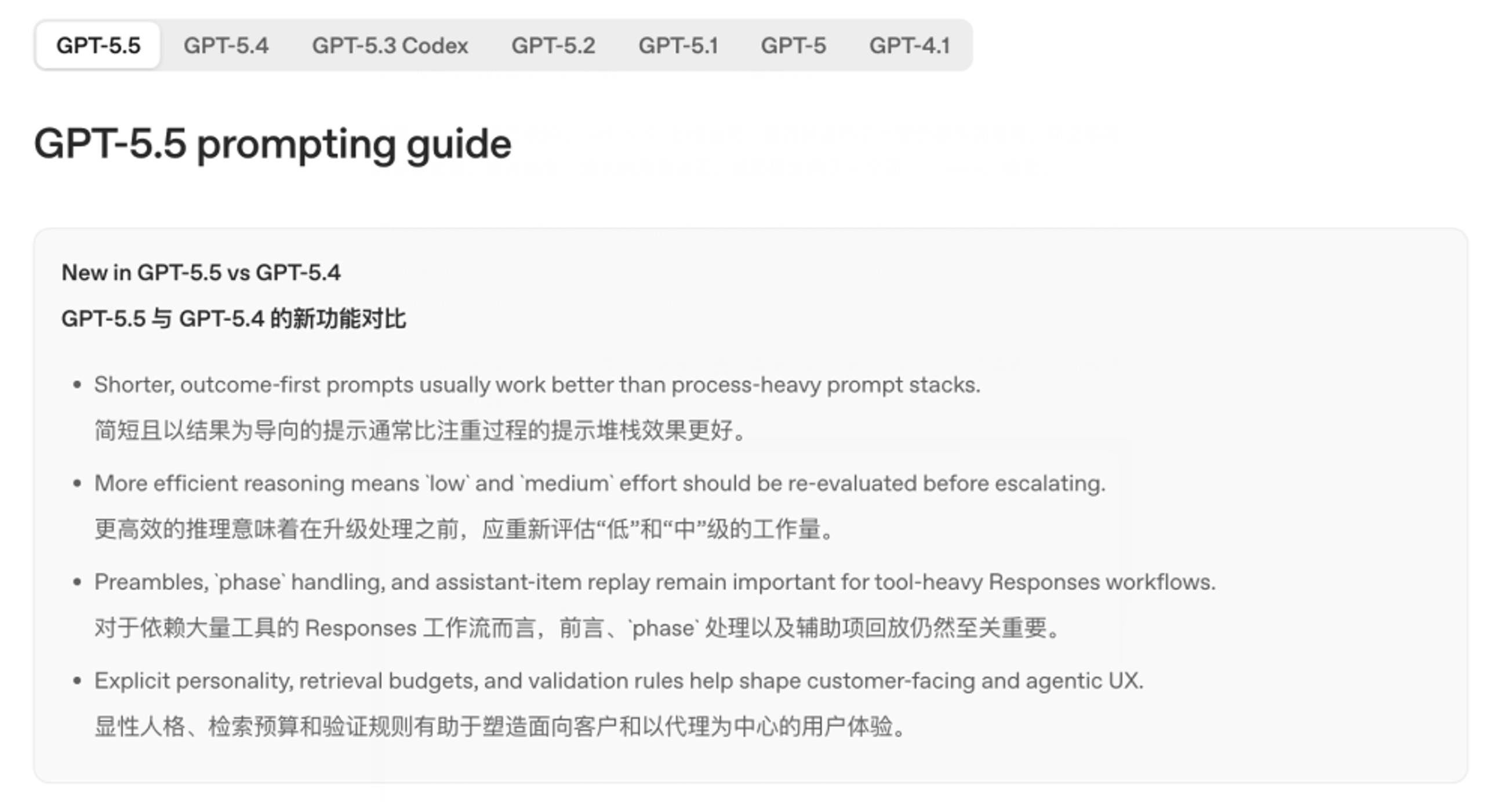
Background: why legacy prompts need a rewrite
Il co-creatore di Django Simon Willison ha notato che OpenAI consiglia di riscrivere da zero invece di assumere che i prompt legacy funzionino ancora. Migrando a GPT-5.5 (o provando capacità simili su LimaxAI), tratta i prompt come un nuovo design di prodotto—not a simple model rename.
Change 1: from hand-holding to outcome-first
Stile vecchio (processo prima):
Controlla A, poi B, confronta i campi uno a uno, ragiona su ogni eccezione, scegli lo strumento e spiega tutto il processo all’utente.
Stile nuovo (risultato prima):
Risolvi completamente il problema dell’utente. Usa policy e dati account per decidere cosa fare prima; riporta fatto e restante. Una sola domanda critica se mancano dati.
Descrivi la destinazione, non ogni svolta sulla mappa. GPT-5.5 pianifica il percorso; uno script rigido può bloccare strade migliori.
Change 2: fewer absolutes—reserve them for real red lines
Guardrails like “always JSON,” “never exceed 500 words,” or “must search before answering” were common. GPT-5.5 is highly sensitive to absolutes—when two conflicting “must” rules appear, the model may try to satisfy both and fail both.
| Situation | Recommended style |
|---|---|
| Safety rules, required fields, hard bans | Use always/never |
| Whether to search or ask the user | Use conditional rules |
Example: replace “must search before answering” with “After receiving the question, check whether existing context is enough to answer; if yes, reply directly without searching.”
Change 3: roles return—but stay short
- Steady: reliable collaborator—calm, direct; advance without unnecessary check-ins.
- Expressive: conversational, curious; ask when ambiguous, decide when context is enough.
Change 4: acknowledge multi-step work before executing
Prodotti come Codex usano già questo schema (es. «Analisi del repository, partendo dai test») per API e lunghe attività ChatGPT.
Change 5: define stop conditions
Solo «cerca informazioni pertinenti e rispondi» senza stop può creare loop di retrieval.
Due strategie comuni:
- Budget di ricerca: un giro di default in Q&A normale; rispondi se basta la prima pagina. Secondo giro solo senza risposta in pagina uno, dati chiave mancanti o richiesta esaustiva.
- Stop del ciclo: dopo ogni giro di tool chiediti se le prove bastano per la domanda centrale; se sì, fermati.
Change 6: the official seven-part prompt skeleton
| Section | Purpose |
|---|---|
| Role | 1–2 sentences: function and context |
| Personality | Tone, style, collaboration |
| Goal | User-visible deliverable |
| Success | Definition of done |
| Constraints | Safety, business, evidence, side effects |
| Output | Format, length, voice |
| Stop rules | When to retry, escalate, refuse, ask, or stop |
OpenAI developer console also offers Optimize to reshape prompts to this structure.
Change 7: format control and concise defaults
GPT-5.5 è conciso per impostazione. API: text.verbosity (default medium, prova low); formati complessi con Structured Outputs.
Esempio di layout:
Paragrafi naturali di default; titoli, grassetto e elenchi solo se aiutano la comprensione.
Nelle riscritture indica cosa preservare prima di come modificare:
Mantieni struttura, lunghezza e voce; migliora solo chiarezza—niente nuove affermazioni o paragrafi salvo richiesta.
Senza regole di preservazione il modello espande e ristruttura spesso.
Migration tip: tune reasoning effort from the low end
Beyond prompts, re-evaluate reasoning.effort. GPT-5.5 defaults to medium; many tasks work at low. Higher is not automatically better—conflicting instructions or weak stop rules plus high effort can mean over-searching and detours. Run A/B tests on a fixed eval set; start with low / medium, then move to high / xhigh only when quality gains justify latency and cost.
Summary: one line to remember
Say what you want—not how to do every step.
| Dimension | GPT-5.4 and earlier | GPT-5.5 |
|---|---|---|
| Process | Detailed steps | Outcomes only |
| Tone | Many absolutes | Absolutes for red lines; conditionals elsewhere |
| Role | Long background | 1–2 sentences + personality |
| Multi-step | Execute immediately | Preamble first |
| Stopping | Often omitted | Should be explicit |
| Structure | Free-form | Seven-part skeleton (trim as needed) |
| Format | Defaults | API params + prompt guidance |
After rewriting, run side-by-side tests on real tasks. To try GPT in chat, use the button below on LimaxAI with your preferred model.